

Tyres and puncture repair in Coburg North
Tyres fitted, balanced and checked, and punctures repaired where the damage is in a repairable part of the tyre.
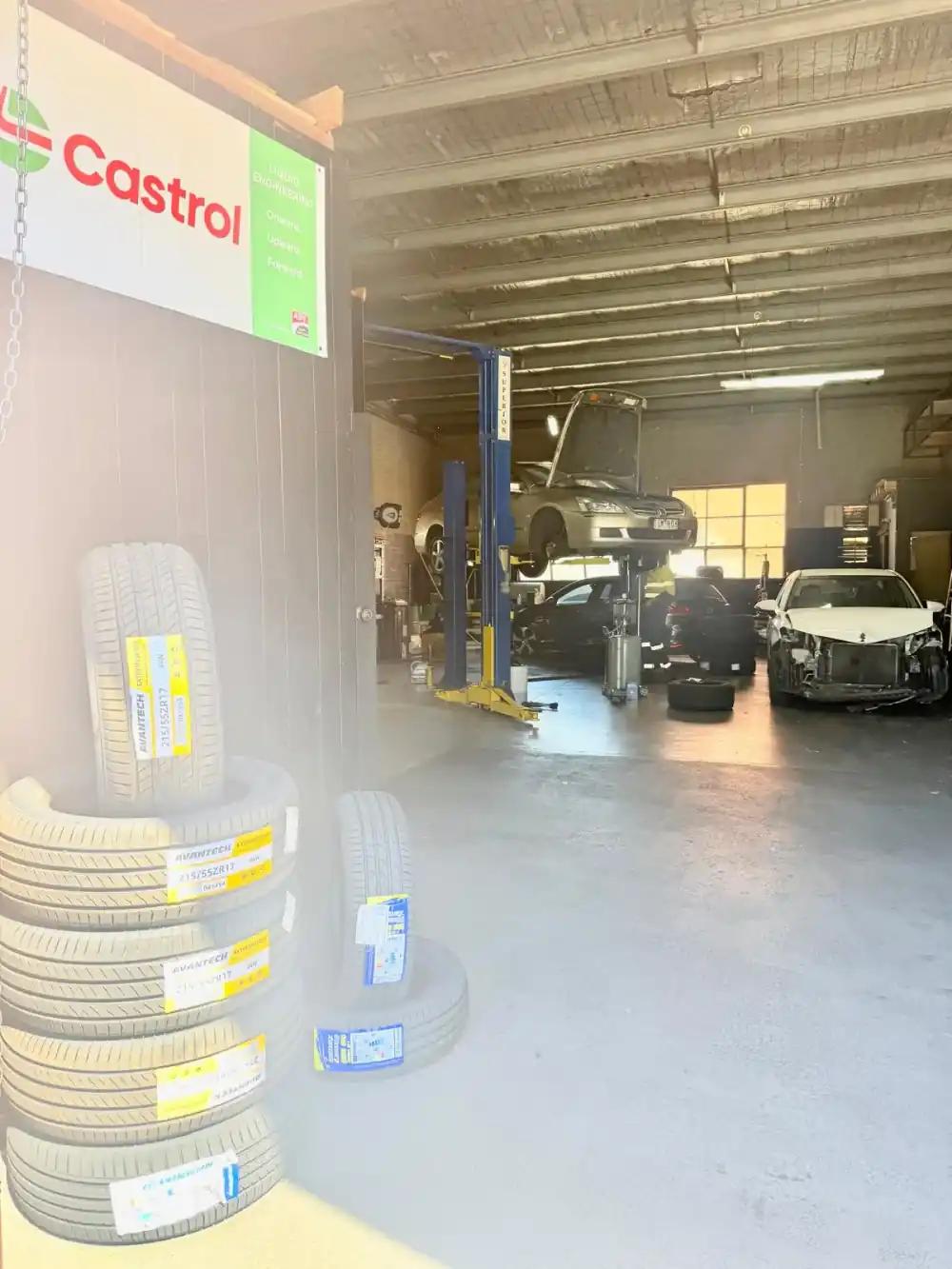
Tyres are the only part of your car that touches the road, and the contact patch on each one is about the size of your hand. Everything the brakes, steering and suspension do is delivered through those four patches.
Tyres are on the service board out the front, so tyre work and a service can be booked for the same day rather than needing a second trip across town.
Punctures, and when one can be repaired
Bring the tyre in and we will tell you honestly whether it can be saved. The answer comes down to where the damage is and what the tyre has already been through.
A nail through the middle of the tread, in a tyre that has not been driven flat, is usually repairable. The tyre comes off the rim, the injury is inspected from the inside, and the repair is done from the inside as a plug and patch. A sealant squirted in through the valve is a way to get home, not a repair.
Damage in the shoulder or the sidewall is not repairable, and neither is a tyre that has been run flat, because the internal structure has already been chewed up even when the outside looks fine. In those cases the tyre gets replaced, and we will show you why.
When it is time for new tyres
A bulge in the sidewall means the internal cords have been broken, usually by a kerb or a pothole. Change it now, do not wait for the next service.
- Tread down to the wear indicator bars in the grooves
- Cracking in the rubber, common on tyres that are old but barely used
- A bulge or an egg shape in the sidewall
- A repair in the shoulder or a previous bodged plug
- One edge worn away while the rest still looks new
- Steering that tramlines and follows every ridge in the road
What a fitting includes
The right size
Size comes off the placard in your door jamb, with the load and speed rating the car was built for, not just the numbers on the old tyre.
Fitted and balanced
New valve where the fitment calls for it, then balanced so the wheel does not shake at highway speed.
Torqued and set
Wheel nuts done up to the correct torque with a wrench rather than a rattle gun, and pressures set to the placard.
Sensors and spare
Tyre pressure sensors reset where the car has them, and we will check the spare while the boot is open.
Wear patterns worth knowing
Even wear across the tread means pressures and geometry are close to right. Wear down the middle usually means over inflation, and wear on both edges usually means under inflation, which also costs you fuel.
Wear on one edge only is a geometry problem, not a tyre problem, and a scalloped or cupped surface usually points at worn suspension. Fitting new rubber without fixing the cause just resets the clock on the same bill, so we look at the rest of the corner before quoting tyres.
Rotating tyres at service time evens the wear out and costs very little to do while the wheels are already off.
What tyres cost
Price starts with the size and the load and speed rating on the placard, because that is what the car has to have, and moves from there with the brand you choose. Call 0451 109 786 with the numbers off the tyre sidewall, or send a photo of it, and we will quote the options.