Pre purchase inspection checklist
Updated 18 Sept 20266 minute readBy AutoworkX, Coburg North
Check it in four passes. The paperwork first, because a car with money owing on it is not yours no matter how well it drives. Then the body for repair history, the mechanical condition for what it will soon cost, and the test drive last. Anything you cannot check yourself is what a workshop inspection is for.
Start with the paperwork, before you look at the car
This pass costs almost nothing and rules out the problems that no amount of mechanical condition can fix. Do it before you drive across town to see the car.
- Run a PPSR check using the VIN. It shows money owing, a written off record and a stolen record, and the certificate is worth keeping.
- Match the VIN on the certificate to the VIN on the car, usually at the base of the windscreen and on a plate in the door opening or under the bonnet.
- Check the seller's name matches the registration papers and their identification. A seller who is not the registered owner needs a good explanation.
- Ask for the service history and read it for gaps, especially around timing belt or major interval kilometres.
- In Victoria, a registered used car has to be supplied with a roadworthy certificate issued within the last thirty days, so ask whether it has one.
AutoworkX is not a licensed roadworthy tester, so we cannot issue that certificate. We can inspect the car, tell you what would fail and carry out the repairs.
The walkaround, in daylight and never in the rain
Wet paint hides everything. Look at the car dry, in daylight, on level ground, with the engine cold so nothing has been warmed up before you arrived. Crouch at each corner and sight down the panels, because ripples and mismatched colour show at an angle and disappear head on.
- Panel gaps that are even down each side, and doors, boot and bonnet that close without a shove
- Paint that matches between adjacent panels, and overspray on rubber seals or in the door shuts
- Rust in the sills, wheel arches, boot floor and around the windscreen rubber
- Tyres worn evenly across the tread and all of a similar age, with the spare and the jack present
- Windscreen chips and cracks, since a crack in the driver's view is a roadworthy failure
- Oil under the engine or gearbox, and coolant staining around the radiator and hoses
Repair history is not automatically a reason to walk away. Melbourne cars get parked in tight streets. Poor repair quality and hidden structural damage are the problems, and those are what a hoist inspection settles.
The checklist, area by area
| Area | What to look for | Why it matters |
|---|---|---|
| Engine, cold start | Rattles on start, smoke from the exhaust, a rough idle, a check engine light that stays on | A warm engine hides the noises a cold one makes, which is why the start matters |
| Fluids | Oil level and colour, coolant that is clean, creamy residue under the oil cap | Neglected fluids and mixed oil and coolant are expensive news |
| Transmission | Hesitation, flaring or a thump between gears, and how a dual clutch behaves at crawling speed | Transmission work can cost a large share of what the car is worth |
| Brakes | Pedal that goes soft or long, grinding, pulsing through the pedal, uneven pad wear | Discs and pads are ordinary wear, a soft pedal is a fault |
| Suspension and steering | Clunks over bumps, a wandering or off centre steering wheel, cupped tyres | Worn bushes and shocks fail a roadworthy and chew tyres |
| Electrics | Every window, lock, light, mirror, the air conditioning and the infotainment screen | Small electrical faults are tedious and often not cheap to trace |
| Underneath | Kinked floor pan, fresh welds or sealer, rust in the rails, leaks from the engine or gearbox | This is the pass you cannot do in a driveway, and the one that changes decisions |
What the test drive has to include
Fifteen minutes around the block tells you very little. Insist on a drive that includes low speed manoeuvring, a stretch of rough road and at least a few kilometres at highway speed, with the radio off and a window down for part of it.
- Brake firmly once from highway speed, where it is safe, and feel for pulsing or pulling
- Let go of the wheel briefly on a flat straight road to see whether the car tracks straight
- Turn full lock both ways at walking pace and listen for clicking from the driveshafts
- Run the air conditioning and the heater, and watch the temperature gauge sit where it should
- Park it, leave it idling for a few minutes, then look underneath for anything dripping
A hoist settles what a driveway cannot
The checks above sort the obvious from the promising. What they cannot do is tell you what the car will cost you over the next year, because that lives underneath it and inside the service history. That is the gap a workshop inspection fills.
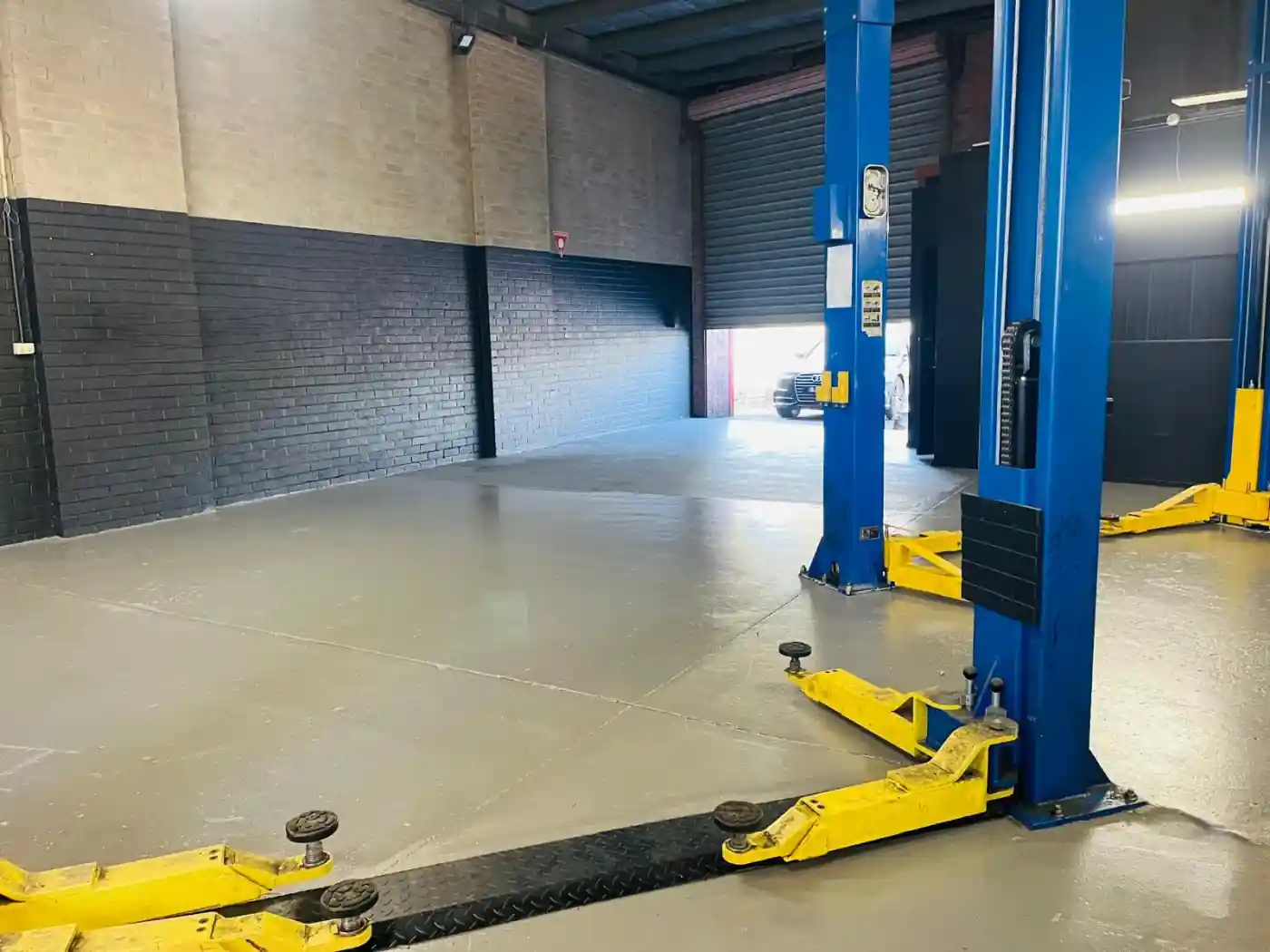
We put the car on a hoist, scan the modules for stored and pending faults, check the body and underbody for repair history, measure the brakes and tyres, look at every fluid, road test it, then go through what we find with you, what needs doing now and what can wait. You then have either a reason to walk away or a number to negotiate with.
Book the inspection before you pay a deposit, and ask the seller to bring the car to us rather than meeting it somewhere without a hoist.
Book once the paperwork comes back clean
Book once you have a car you are serious about and the paperwork has come back clean. Private sales are where an inspection earns its keep most often, because there is no dealer warranty behind the purchase and the car is sold as it stands.
Have the advertisement, the VIN and the PPSR certificate handy when you book, along with whether it is a private or a dealer sale. If the seller will not let the car be inspected, that is an answer in itself.